Cities are where health, climate, and everyday life collide. A well-designed town can make it easy to walk to school, meet a friend in a shady park, cycle to work without fear, and stay cool during a heatwave. A poorly designed one can bake in summer, flood in storms, isolate residents, and quietly nudge people toward sedentary, car-dependent routines.
Urban design is the bridge between big policy goals (public health, decarbonization, climate adaptation) and the street-level reality of how people move, gather, and live. Landscape architecture—through parks, streetscapes, waterways, and green infrastructure—often provides the most visible and measurable “wins,” because it reshapes public space while delivering ecological performance.
Below is a practical way to think about designing healthy, resilient, and sustainable towns and cities—plus landscape architecture examples from around the world that show what it can look like in practice.
1) Start with health: design for daily movement, comfort, and connection
Health isn’t only a healthcare issue—it’s a “default environment” issue. The most powerful design interventions are the ones people use without thinking.
a) Make active travel the easiest option
Healthy cities make walking, cycling, and transit feel safe, direct, and pleasant.
Design moves that matter:
-
Short blocks and connected street grids so walking is direct (and feels logical).
-
Protected cycle networks (continuous, not “paint-only” fragments).
-
Transit-first streets with reliable buses/trams, sheltered stops, and clear crossings.
-
Mixed-use neighbourhoods so daily needs are within a 5–15 minute trip.
Landscape architecture role: street trees for shade, bioswales that narrow crossings, “green buffers” between bikes and traffic, pocket parks that break up long walks.
b) Design “thermal comfort” into public life
A city can have great sidewalks, but if it’s 38°C and treeless, walking becomes a punishment.
Design moves that matter:
-
Tree canopy along pedestrian routes (not just in parks).
-
Light-coloured, permeable surfaces where feasible to reduce heat buildup.
-
Water features used wisely (shade + evapotranspiration + play + cooling).
-
Shaded seating every few minutes on foot, especially near transit and shops.
c) Build social health through public space
Loneliness and stress are urban design problems too. Plazas, parks, and “third places” create informal support systems.
Design moves that matter:
-
Inviting edges: cafés, stoops, benches, and active ground floors facing public space.
-
Multi-generational amenities: play, exercise, quiet zones, and accessible paths together.
-
Safety through design: lighting, sightlines, and activity—not hostile architecture.
2) Resilience: treat the city as a living system, not a machine
Resilience means a city can absorb shocks—heatwaves, storms, economic disruption—and still function. The best strategies often look like “quality of life” upgrades, but they’re doing serious climate work under the surface.
a) Use nature-based solutions for flooding and stormwater
Instead of trying to pipe and pump every drop away, resilient cities store, slow, and soak water using parks and streets.
Design moves that matter:
-
Sponge streets: permeable paving, rain gardens, and bioswales.
-
Parks as floodplains: landscapes that can temporarily flood without damage.
-
Blue-green corridors: connected waterways + green space that move water safely.
b) Design for heat resilience and clean air
Heat is one of the deadliest climate risks in cities, especially for older adults and people with limited mobility.
Design moves that matter:
-
Canopy targets by neighbourhood (equity matters; heat risk is uneven).
-
Cool routes to key destinations (schools, clinics, transit).
-
Greening freight and arterial corridors where pollution burdens are highest.
c) Plan for redundancy and adaptability
Resilient places offer options: multiple routes, multiple gathering points, flexible spaces.
Design moves that matter:
-
Distributed parks (not one “big park” far away).
-
Flexible streets that can shift from traffic to festivals, markets, or emergency access.
-
Modular public realm improvements that can be expanded over time.
3) Sustainability: cut emissions and restore ecology by design
Sustainable urbanism isn’t just about efficient buildings—though that matters. It’s about land use, mobility, materials, and ecosystems working together.
a) Reduce car dependence through proximity and choice
The cleanest trip is the one you don’t need to take—and the second cleanest is on foot, bike, or transit.
Design moves that matter:
-
Compact growth around transit.
-
Complete neighbourhoods (schools, groceries, parks, jobs).
-
Parking reform (right-size supply; reinvest land in housing and public space).
b) Make green infrastructure a standard utility
Treat tree canopy and stormwater landscapes like essential infrastructure—because they are.
Design moves that matter:
-
Maintenance budgets and stewardship plans (green fails without care).
-
Soil volume standards for street trees (healthy trees need room).
-
Biodiversity design (native plantings, habitat corridors, pollinator networks).
Landscape architecture examples from around the world
These projects show how public space can deliver health, resilience, and sustainability together.
Seoul, South Korea — Cheonggyecheon Stream Restoration
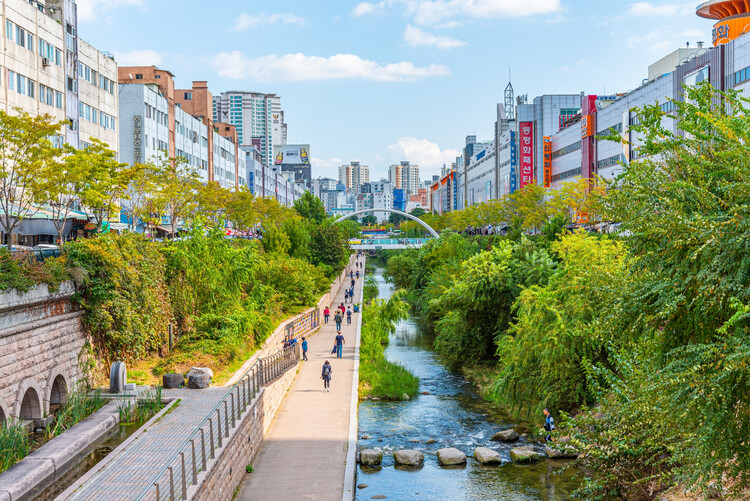
Cheonggyecheon stream in Seoul, Korea. Source: archdaily.com_trabantos via Shutterstock
A buried stream and elevated roadway became a revitalized linear waterway and public space. Beyond aesthetics, it improved microclimate comfort, created a walkable corridor, and reintroduced ecological function in the heart of the city.
Takeaway: Restoring blue-green systems can be both climate adaptation and civic transformation.
Singapore — Bishan–Ang Mo Kio Park
A concrete canal was reimagined as a naturalized river within a major park, designed to flood safely during storms and provide everyday recreation the rest of the time.
Takeaway: Parks can be beautiful flood infrastructure—designed for overflow, not failure.
Copenhagen, Denmark — Climate-adaptive streets and parks (Cloudburst approach)
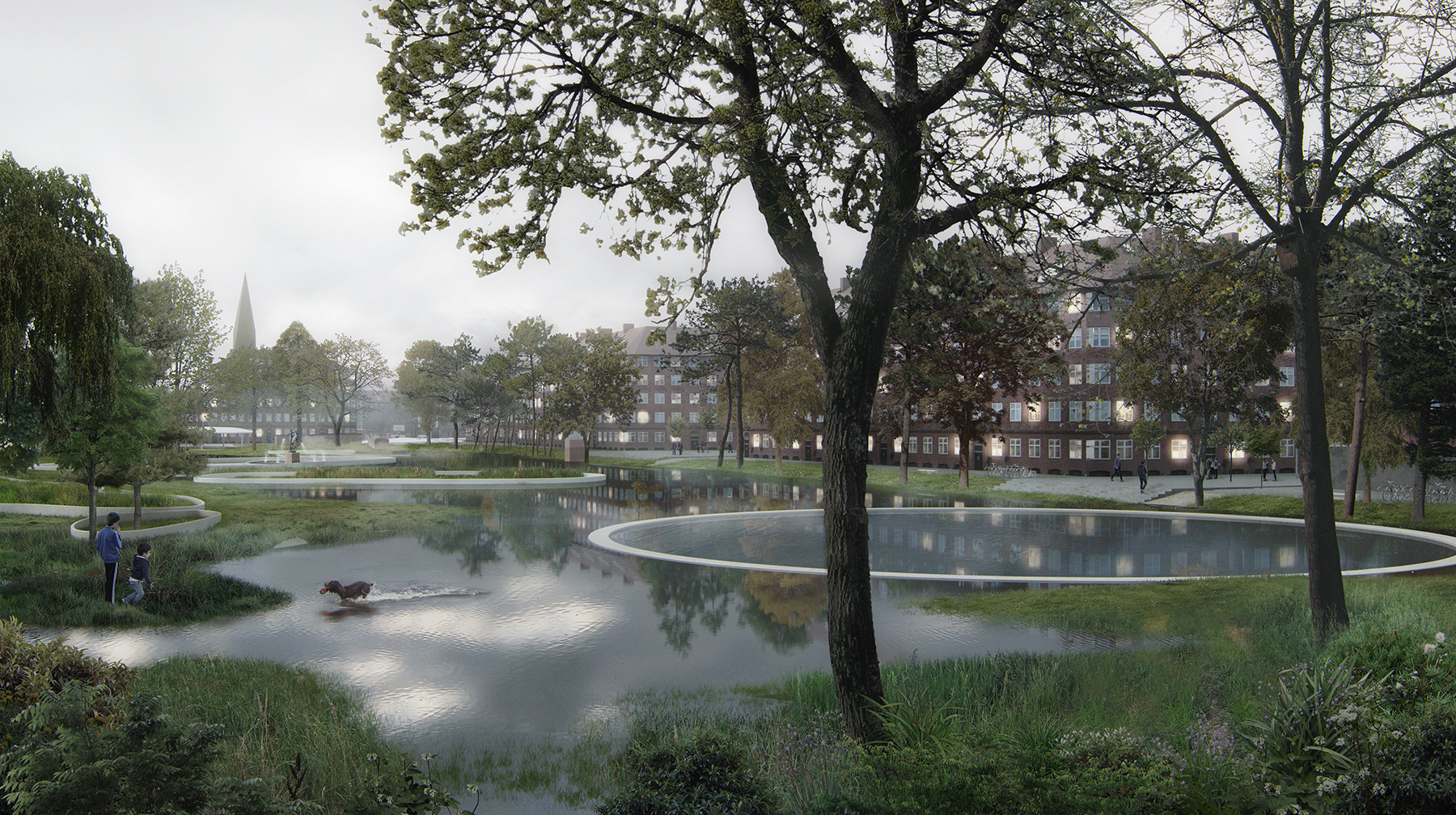
Hans Tavsens Park, in the Nørrebro district of Copenhagen, Denmark. Source: Beauty and the Bit, courtesy of SLA
Copenhagen has pioneered “cloudburst” landscapes that store and redirect stormwater through redesigned streets, plazas, and neighbourhood parks—turning extreme rainfall into a managed, visible system.
Takeaway: Climate adaptation can upgrade daily life: greener streets, safer neighbourhoods, better public spaces.
Rotterdam, Netherlands — Water Squares
Rotterdam’s water plazas function as sports courts and gathering spaces in dry weather, then temporarily store stormwater during heavy rainfall.
Takeaway: Multi-use public space can do double duty—social infrastructure and flood resilience.
New York City, USA — The High Line (and the broader shift to linear parks)
A disused rail line became an elevated park that reshaped land use, walkability, and public life. While it sparked important debates around equity and displacement, it also shows the power of landscape-led regeneration.
Takeaway: Iconic public space can catalyse investment—so pair it with affordability and anti-displacement tools.
Medellín, Colombia — Green Corridors
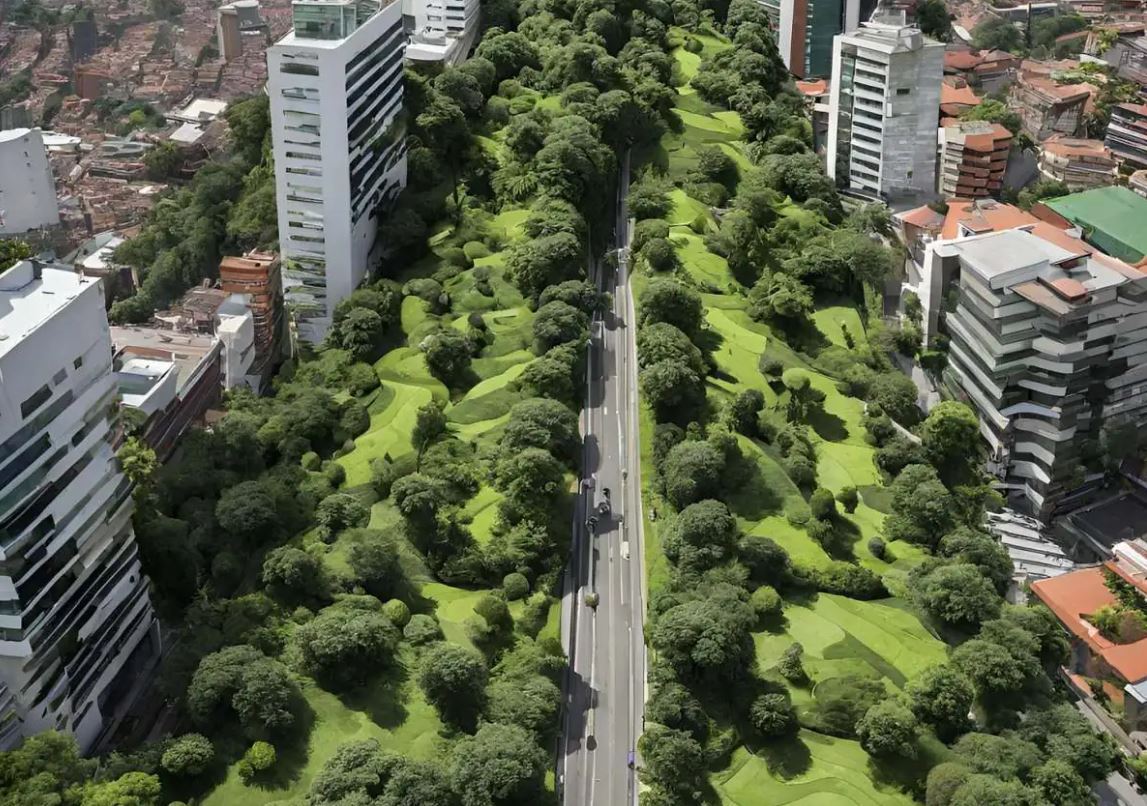
City of Medellin: A preliminary concept of what the city landscape is evolving into. Source: earthlymission.com
A network of planted corridors and public realm improvements targeted heat, air quality, and safer walking routes—especially in dense neighbourhoods.
Takeaway: Distributed greening along everyday routes can deliver measurable comfort and health benefits.
Barcelona, Spain — Superblocks and greener streets
Barcelona’s “superblock” approach reassigns street space from through-traffic to local access, walking, cycling, trees, play, and outdoor life.
Takeaway: You don’t always need new land for parks—you can reclaim street space.
Freiburg, Germany — Vauban (district-scale sustainable urbanism)
A compact neighbourhood designed around transit, cycling, and walkability, with strong public realm and green space integration.
Takeaway: District planning that prioritizes low-car living makes sustainability feel convenient, not restrictive.
Jinhua & Harbin, China — “Sponge city” park precedents (e.g., stormwater parks)
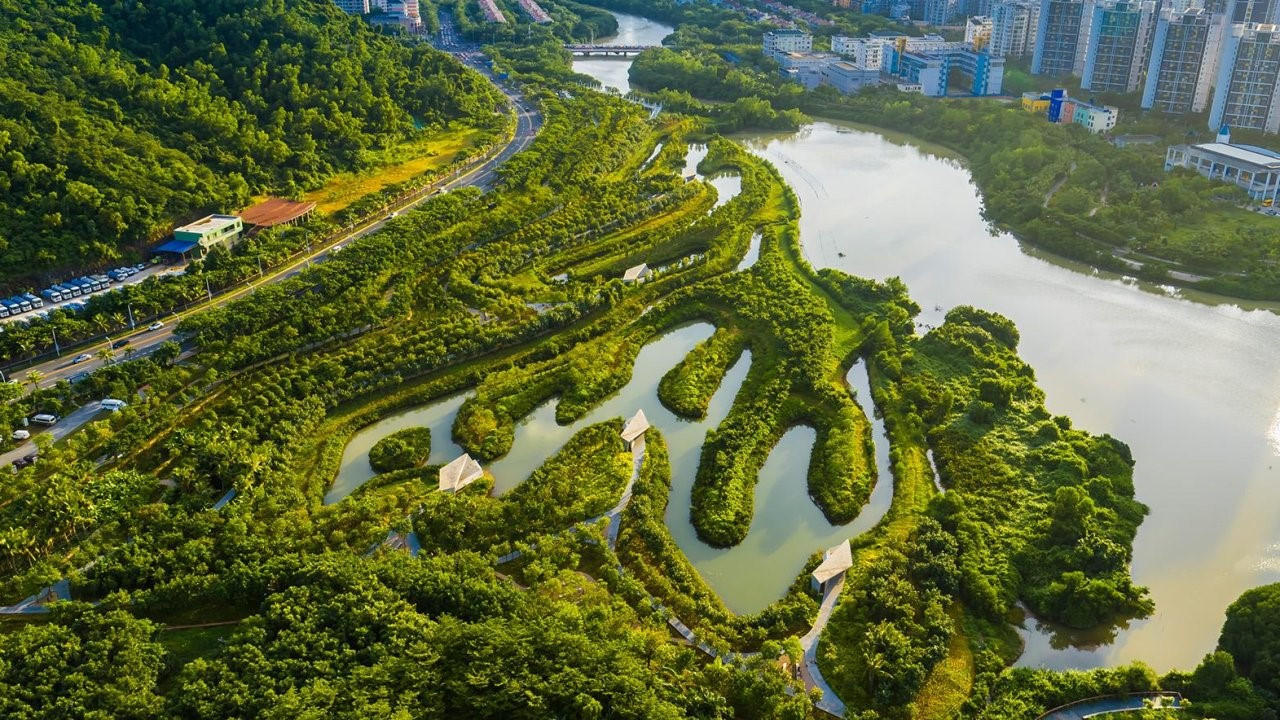
Yanweizhou Park in Jinhua City A sponge city is a city that’s “designed to passively absorb, clean and use rainfall in an ecologically friendly way that reduces dangerous and polluted runoff”, and leverage techniques such as permeable roads, rooftop gardens, rainwater harvesting, green space and more. Source: turenscape.com
Stormwater parks designed to detain, filter, and slowly release water demonstrate how landscape can function as an urban-scale water management system while providing recreation and habitat.
Takeaway: When water is treated as a design material, resilience becomes visible and legible.
Madrid, Spain — Madrid Río
A major highway corridor along the river was transformed into a connected park system, improving walkability and access while restoring the riverfront as civic space.
Takeaway: Rebalancing infrastructure away from cars can unlock massive public health and environmental gains.
A simple framework cities can use tomorrow
If you’re working on a plan, a redevelopment site, or even a single corridor, this checklist helps align projects with health + resilience + sustainability:
-
Proximity: Can residents reach daily needs within a 15-minute walk/bike/transit trip?
-
Safety: Are crossings short, speeds low, and bike routes protected and continuous?
-
Shade & comfort: Is there canopy along key walking routes and at transit stops?
-
Water logic: Where does stormwater go today—and how can it be slowed, stored, and cleaned in public space?
-
Heat logic: Where are the hottest blocks—and what’s the canopy/reflectivity/green cover strategy there?
-
Equity: Are the biggest investments going to the neighbourhoods with the highest health and climate risk?
-
Longevity: Who maintains the landscape, with what budget, and how is success measured?
The big idea: design the “everyday city”
The most successful healthy, resilient, sustainable cities don’t rely on a single flagship eco-district or a photogenic park. They focus on the everyday network: the shady walk to school, the safe bike route to work, the plaza that holds stormwater and weekend markets, the park that floods once a year and is loved the other 364 days.
If urban design sets the rules of daily life, landscape architecture makes those rules feel good—cooler, greener, safer, and more human.

