From a landscape architect’s point of view, placemaking is not just about making a space look attractive. It is the work of turning public space into a living place by aligning landform, planting, water, movement, climate, culture, and everyday use with the needs and identity of the people who share it. Project for Public Spaces describes placemaking as a participatory process based on observing, listening, and building a common vision, while ASLA frames public-practice landscape architecture around designing, implementing, and managing public places that support gathering, history, resilience, and economic vitality.
What are the main characteristics of placemaking?
Good placemaking is community-driven, context-specific, inclusive, adaptive, collaborative, and focused on function before form. It does not begin with an object or a style; it begins with how a place should work for people. PPS also argues that successful places usually share four core qualities: they are accessible, comfortable, active, and sociable. For landscape architects, that means design has to perform socially and spatially at the same time.
A landscape architect also reads a place as a system, not just a site. That includes topography, hydrology, shade, planting structure, habitat, edges, circulation, views, seating, and maintenance. In other words, placemaking is both public-life design and site-systems design.
What is the placemaking process?
The process usually starts with reading the place carefully: observing who uses it, when, how, and why. Then comes engagement with residents, workers, visitors, and stakeholders to understand needs and aspirations. From there, the team builds a shared vision, tests ideas through temporary or small-scale moves, develops the long-term spatial design, and then programs, manages, and adapts the place over time. PPS explicitly emphasizes observation, listening, small steps, “Lighter, Quicker, Cheaper” testing, and the “Power of 10+” idea that a place should offer many reasons to be there.
That last step matters as much as the drawings. PPS notes that management is often the ultimate determinant of whether a place succeeds. From a landscape architecture perspective, stewardship is part of the design, not something added later.
What does placemaking focus on?
Its focus is everyday public life. That means less attention on spectacle alone and more attention on comfort, access, legibility, safety, belonging, and repeat use. A successful place gives people reasons to arrive, stay, return, and feel some ownership over it.
For landscape architects, the focus also includes environmental performance. A good place should handle water well, create thermal comfort, support biodiversity, improve walkability, and express local ecology and cultural memory. In strong projects, social life and ecological performance reinforce each other rather than compete.
What are the main priorities?
The first priority is people, but not in an abstract way. It means designing for actual users, actual routes, actual habits, and actual local culture. The second priority is access and inclusion: the place must be easy to reach, easy to understand, and welcoming across ages, abilities, and backgrounds. The third is activity: people need things to do, choices to make, and reasons to linger. The fourth is identity: the place should feel rooted in its context rather than interchangeable.
A fifth priority, especially from a landscape perspective, is long-term resilience. That includes climate comfort, flood handling, ecological health, durable materials, and maintenance capacity. A place that is beautiful for six months but expensive or fragile after that is not strong placemaking.
What strategies and design rules tend to work?
There is no universal rulebook, but a few working rules appear again and again.
Start with public life, not form. Ask what people will do there before deciding what it should look like.
Design for the four basics: access, comfort, activity, and sociability. If one of those is weak, the place usually feels incomplete.
Give people many reasons to stay. The “Power of 10+” is useful here: sitting, eating, watching, playing, meeting, resting, learning, performing, and passing through can all coexist.
Prototype before overbuilding. Temporary seating, events, shade, art, play, or traffic changes can test demand before major capital work.
Use local identity as design material. History, culture, memory, plants, and local stories should shape the place, not just decorate it.
Design maintenance into the place. Stewardship, governance, and management should be visible in the plan from day one.
One more important point: placemaking is not just beautification, branding, or a photogenic plaza. PPS warns that the term loses its value when it is detached from real public participation and reduced to a label for development or image-making.
Five valuable placemaking examples from around the world
1. The High Line, New York, USA
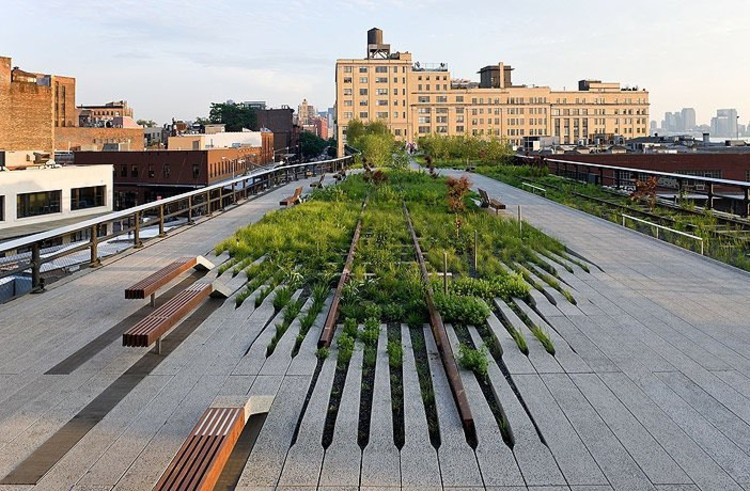
The HIgh Line, New Yourk, USA (Source: Iwan Baan_archdaily.com)
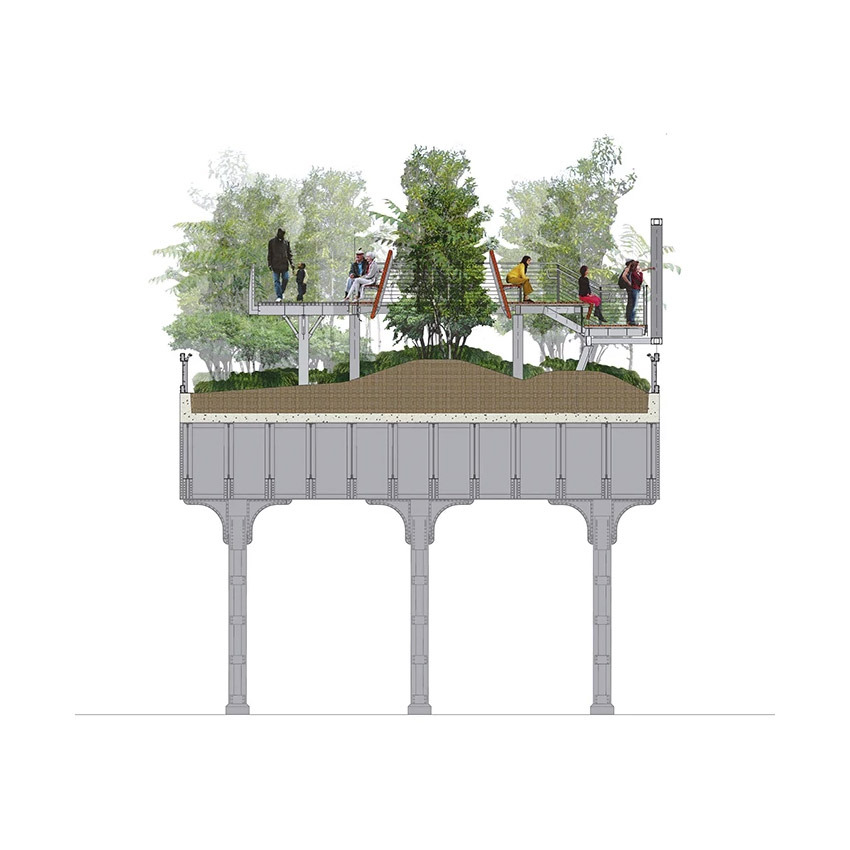
The High Line , New York, USA (Source: Field Operations and Diller Scofidio + Renfro, courtesy of the City of New York_archeyes.com)
The High Line is a 1.5-mile public park built on an abandoned elevated railroad in Manhattan, designed by James Corner Field Operations with Diller Scofidio + Renfro and planting designer Piet Oudolf. Its landscape strategy translates the old rail structure into a sequence of paving-and-planting gradients, with different urban microclimates along the route, and it is stewarded by the nonprofit conservancy Friends of the High Line in partnership with NYC Parks.
I chose it because it is one of the clearest examples of adaptive reuse as placemaking. It shows how obsolete infrastructure can become a public destination without erasing its industrial memory. What makes it valuable is the way circulation becomes experience: walking, viewing, planting, and urban identity are fused into one linear civic landscape. Its key characteristics are strong narrative reuse, immersive planting, memorable sectional experience, and careful stewardship. Its benefits are improved walkability, a distinctive public realm, and a powerful model for turning leftover infrastructure into shared space.
2. Superkilen, Copenhagen, Denmark
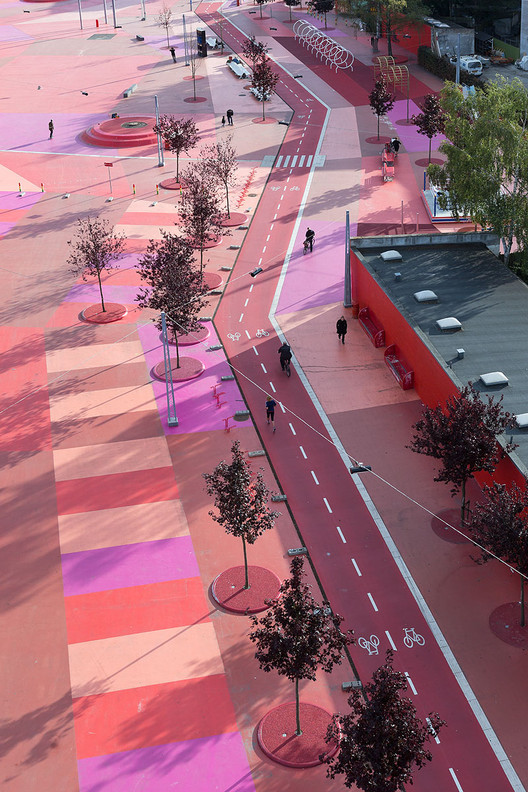
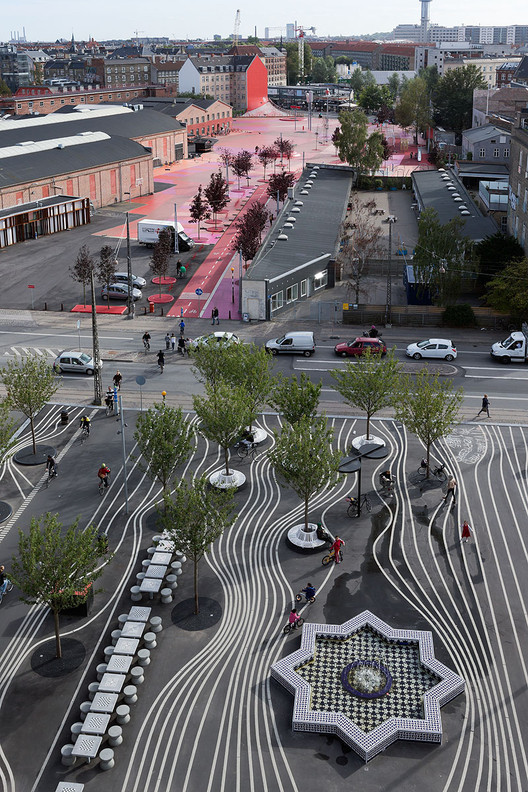
Superkilen, Copenhagen, Denmark, by Topotek 1 + BIG Architects + Superflex (Source: archdaily.com)
Superkilen is a 27,000 m² urban park in Nørrebro by Topotek 1 with BIG and Superflex. The project divides the site into three zones with different functions, and residents helped choose 108 objects and 11 trees from around the world, from a Moroccan fountain to a Japanese play structure and soil from Palestine. BIG describes public participation as the driving force of the design.
I chose Superkilen because it demonstrates that placemaking is not only about comfort and greenery; it is also about representation, identity, and cultural authorship. We think it is valuable because it treats diversity as physical design content, not as a slogan. Its key characteristics are co-creation, symbolic landscape elements, multiple activity zones, and a strong visual identity. Its benefits are social recognition, cultural visibility, varied uses, and a sense that the neighbourhood sees itself reflected in public space.
3. Cheonggyecheon, Seoul, South Korea
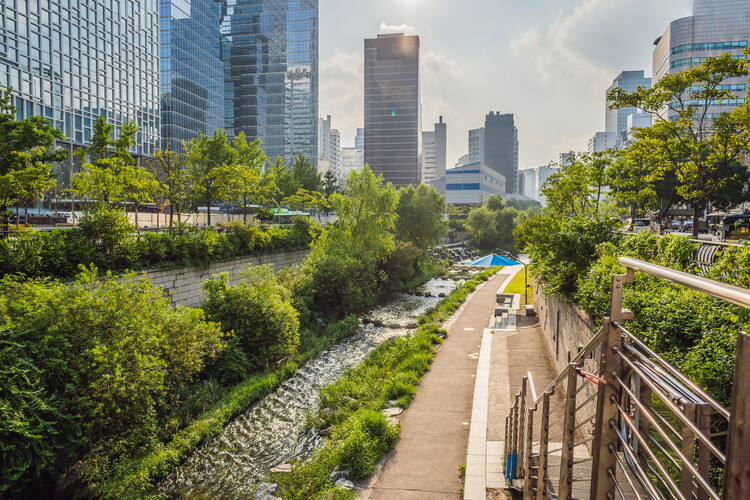
Re-Naturalization of Urban Waterways: Cheonggye Stream in Seoul, South Korea (Source: Elizaveta Galitckaia via Shutterstock)
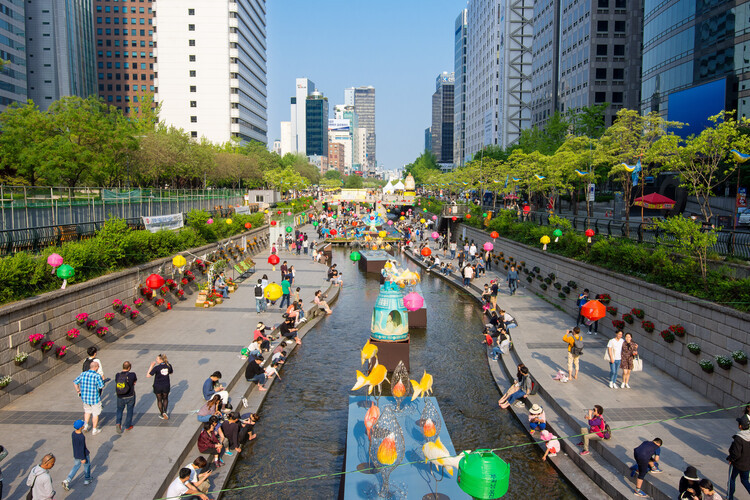
Cheonggye Stream in Seoul, South Korea (Source: Nghia Khanh via Shutterstock)
Cheonggyecheon restored 5.84 km of stream corridor in central Seoul between 2003 and 2005 after the removal of highway infrastructure. The project included 22 bridges, major pedestrian improvements, and a structured implementation model made up of a citizens’ committee, a headquarters, and a research group. Seoul’s own documentation reports reduced heat-island conditions, improved air quality, ecological recovery, and a shift away from private-car dominance in downtown traffic.
I chose it because it proves that placemaking can operate at metropolitan scale, not just plaza scale. We think it is valuable because it combines public realm, ecology, mobility, and governance in one project. Its key characteristics are river restoration, pedestrian priority, environmental repair, and formalized public participation. Its benefits are cooler microclimate, more biodiversity, stronger public space, and a more people-oriented urban structure.
4. Barangaroo Reserve, Sydney, Australia
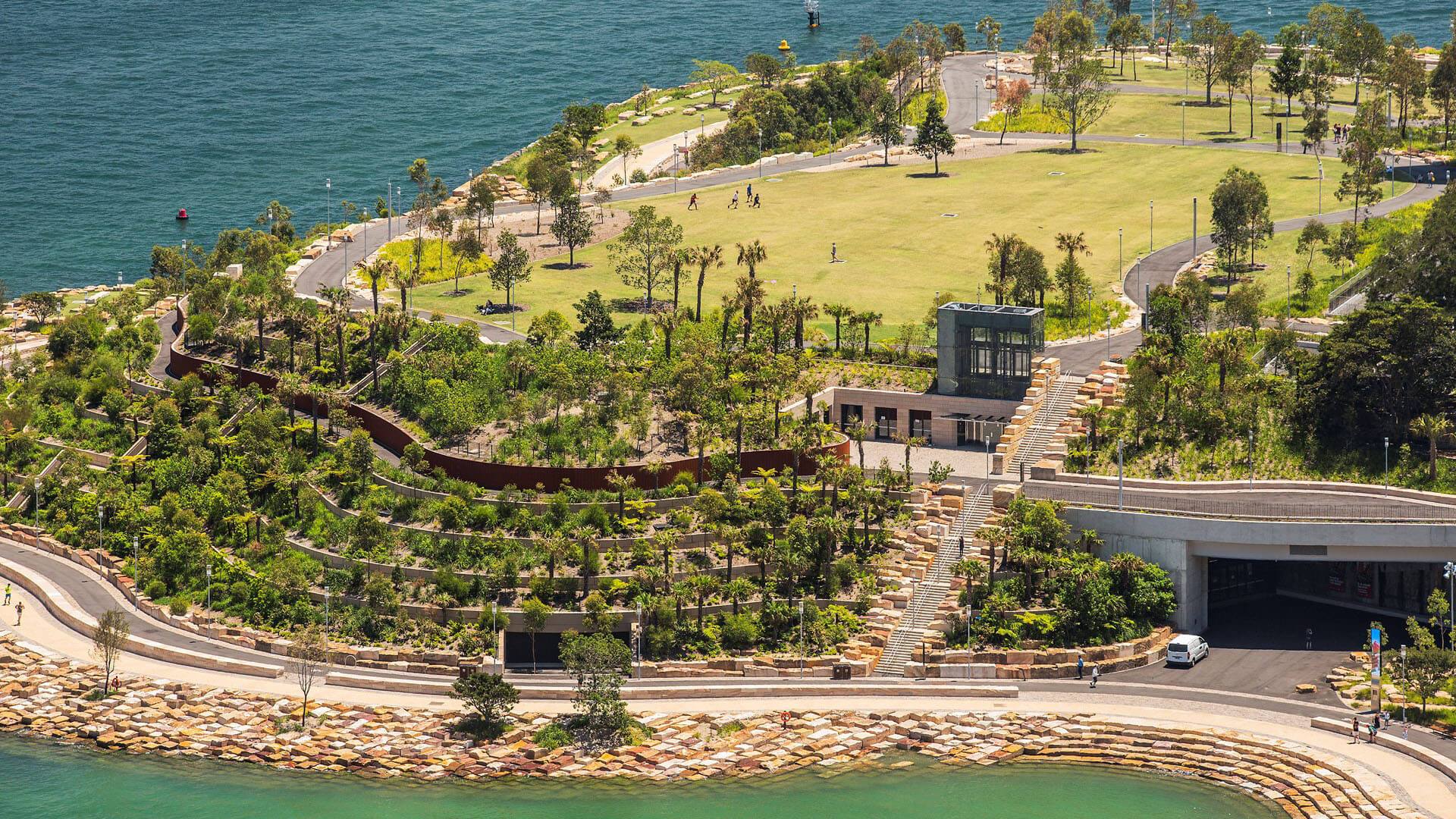
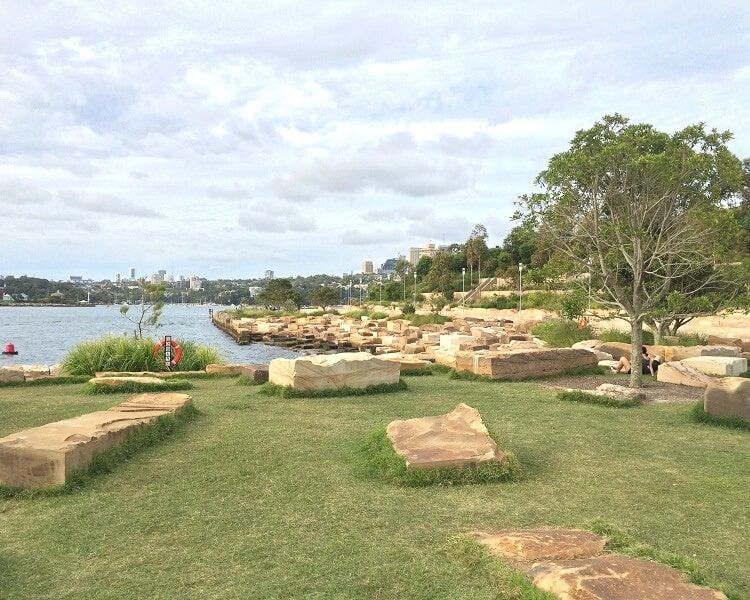
Barangaroo Reserve: 75,000 native trees and shrubs, rolling green lawns, wide open spaces and sweeping views of Sydney Harbour. (Source: barangaroo.com)
Barangaroo Reserve transformed an industrial waterfront into a headland park that reimagines the pre-colonial landform and acknowledges Gadigal Country. Official project material notes 75,000 native trees and shrubs, 10,000 sandstone blocks, and a design process that used early maps and paintings to reconstruct terrain; PWP describes it as recreating a historic headland on an abandoned dock.
I chose Barangaroo because it shows placemaking as repair: ecological repair, waterfront repair, and cultural repair. We think it is valuable because it makes landscape memory tangible through topography, planting, and material reuse instead of relying only on signage or symbolism. Its key characteristics are strong landform design, native planting, local material expression, and deep connection to First Nations history. Its benefits are public waterfront access, habitat value, a powerful sense of place, and a public landscape that feels specific to Sydney rather than generic.
5. Madrid Río, Madrid, Spain
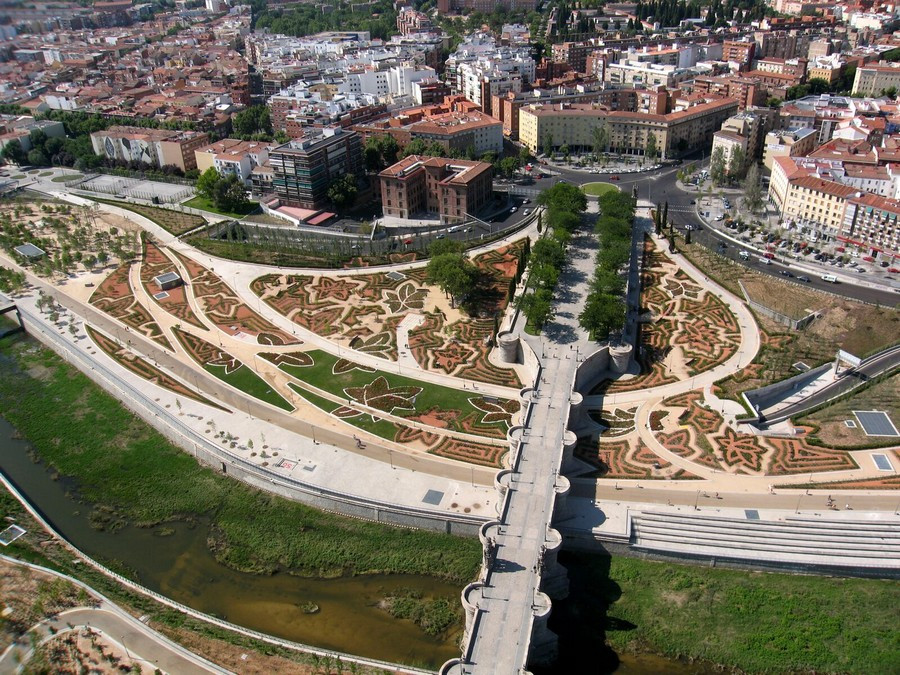
Madris Rio, Madrid, Spain (Source: e-architect.com)
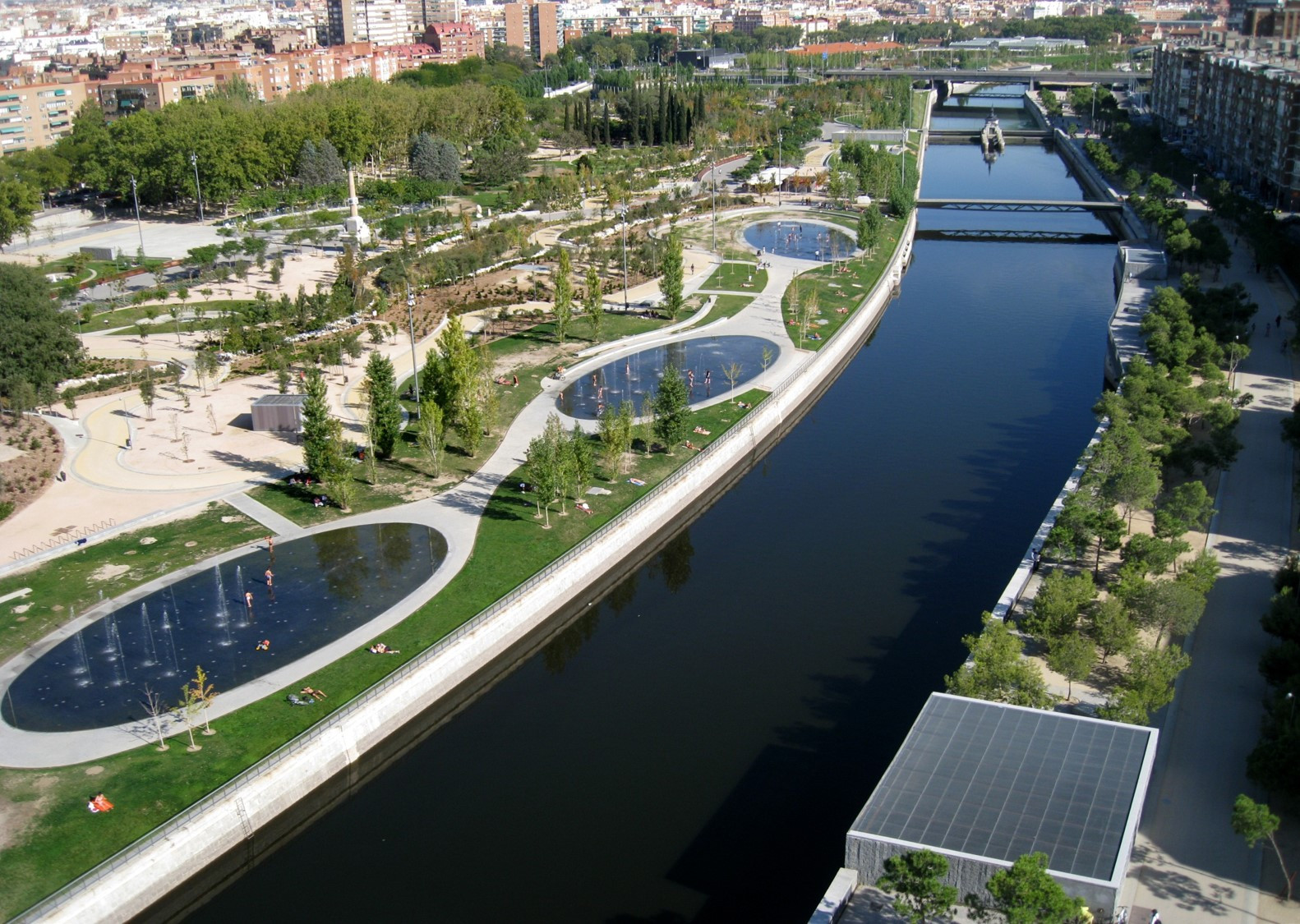
(Source: madrides.es)
Madrid Río reclaimed the Manzanares riverbanks after the city buried major motorway infrastructure in 43 kilometres of tunnels. West 8 describes a 120-hectare park made up of 50 subprojects, 12 new pedestrian bridges, 8,000 pine trees, sports facilities, playgrounds, bike lanes, cafés, and event spaces, all aimed at reconnecting the river to the city and linking communities.
I chose Madrid Río because it is one of the best examples of placemaking at district scale. We think it is valuable because it does more than create a park: it stitches neighbourhoods back together, changes how people reach the river, and converts infrastructure into a civic landscape network. Its key characteristics are continuity, connectivity, layered programming, and pedestrian-focused public realm. Its benefits are stronger neighbourhood links, major recreation space, better river access, and a public landscape that works as both ecological corridor and urban social space.
The most important thing to say about placemaking is that it is not a style. It is a way of working. From a landscape architect’s perspective, the best placemaking projects succeed because they combine public participation, ecological intelligence, spatial clarity, local identity, and long-term stewardship. The five projects above look very different, but they share the same deeper logic: each turns space into a place people can recognize, use, remember, and care for.