Health does not begin in a clinic. It begins in the places where people live, walk, wait, gather, play, and rest. Sidewalks, parks, plazas, schoolyards, transit stops, greenways, and community gardens all shape daily life in ways that can either expand or limit well-being. For landscape architects, this makes public space a powerful health infrastructure.
When we talk about health equity, we mean that everyone has a fair and just opportunity to be as healthy as possible. That goal is not met by treating everyone the same. It requires recognizing that some communities have faced long-term barriers such as disinvestment, environmental burdens, unsafe streets, lack of tree canopy, limited park access, or public spaces that feel unwelcoming or inaccessible. Thoughtfully designed public spaces can help close those gaps.
Public space as everyday health infrastructure
Public spaces influence health in direct and indirect ways. They support physical activity, reduce stress, improve air quality, create social connection, and offer relief during heat events. They can make healthy choices easier by giving people safe, attractive places to walk, sit, play, and interact.
But the benefits of public space are not automatically shared equally. In many cities, wealthier neighbourhoods tend to have better-maintained parks, more shade, calmer streets, and more amenities. Meanwhile, lower-income communities and historically marginalized neighbourhoods may face the opposite: fewer green spaces, more pollution, less safety, and weaker public investment.
This is where landscape architecture matters. Public spaces can become tools for health equity when they are designed not only to be beautiful, but to be accessible, inclusive, culturally grounded, and fairly distributed.
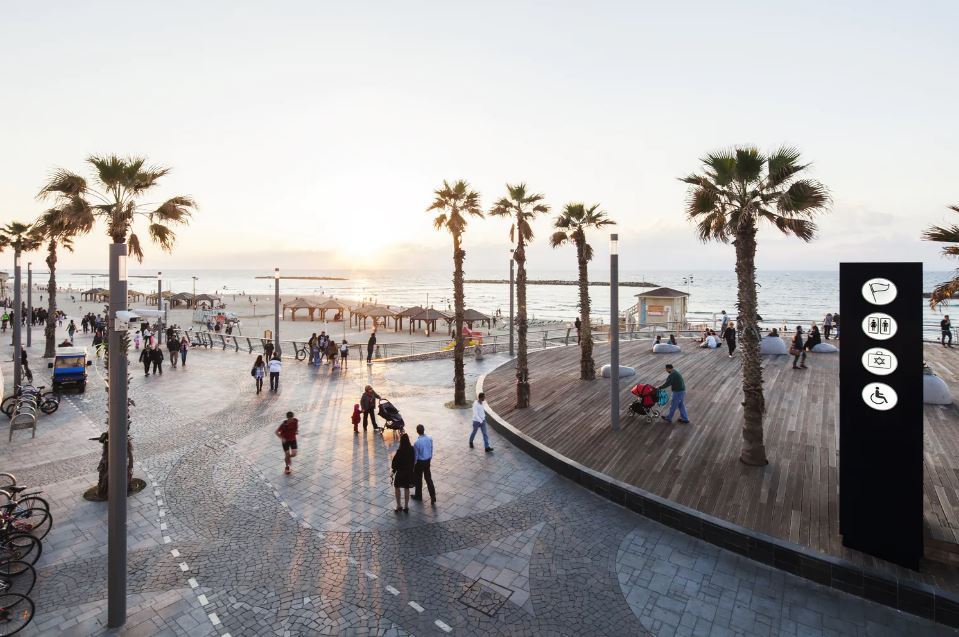
Tel Aviv’s Central Promenade Renewal, Tel Aviv, Israel, Mayslist Kassif Architects (Souce: archdaily.com_re-thinkingthefuture.com)
Access is the first equity question
A park cannot improve health if people cannot reach it, use it, or feel comfortable there. Access is about much more than proximity on a map.
True access includes:
- Safe walking and rolling routes
- Reliable transit connections
- Entrances that are visible and welcoming
- Spaces that work for children, older adults, and people with disabilities
- Amenities such as seating, toilets, shade, lighting, and drinking water
- Hours, programming, and maintenance that support regular use
A small neighbourhood plaza that is easy to reach and feels safe may do more for daily health than a larger park cut off by high-speed roads. In health-equity terms, the quality of the journey matters as much as the destination.
Designing for physical activity without making it feel like exercise
One of the strongest ways public spaces support health is by inviting movement into everyday routines. People are more likely to walk, bike, play, and spend time outdoors when spaces are comfortable, interesting, and connected.
Landscape architects can encourage physical activity by creating:
- Walkable networks between homes, schools, shops, and transit
- Play environments for different ages and abilities
- Trails, loops, and open lawns for flexible recreation
- Streetscapes that slow traffic and improve pedestrian safety
- Rest areas that allow people with limited stamina to participate
This matters for health equity because opportunities for routine movement are often unevenly distributed. In communities with fewer recreational resources or where private fitness options are unaffordable, public space becomes essential.
Mental health needs public space too
Health equity is not only about preventing disease. It is also about reducing chronic stress, social isolation, and the mental toll of inequality.
Public spaces can support mental well-being by offering moments of calm, beauty, control, and belonging. Trees, planting, water, biodiversity, and seasonal change can help restore attention and reduce stress. Quiet seating areas, walking paths, and community gathering spaces can create room for both solitude and connection.
For communities facing economic pressure, overcrowding, or environmental stress, access to restorative outdoor space is especially important. A shaded bench under trees, a safe playground where caregivers can meet, or a community garden where neighbours build relationships can all contribute to better mental health outcomes.
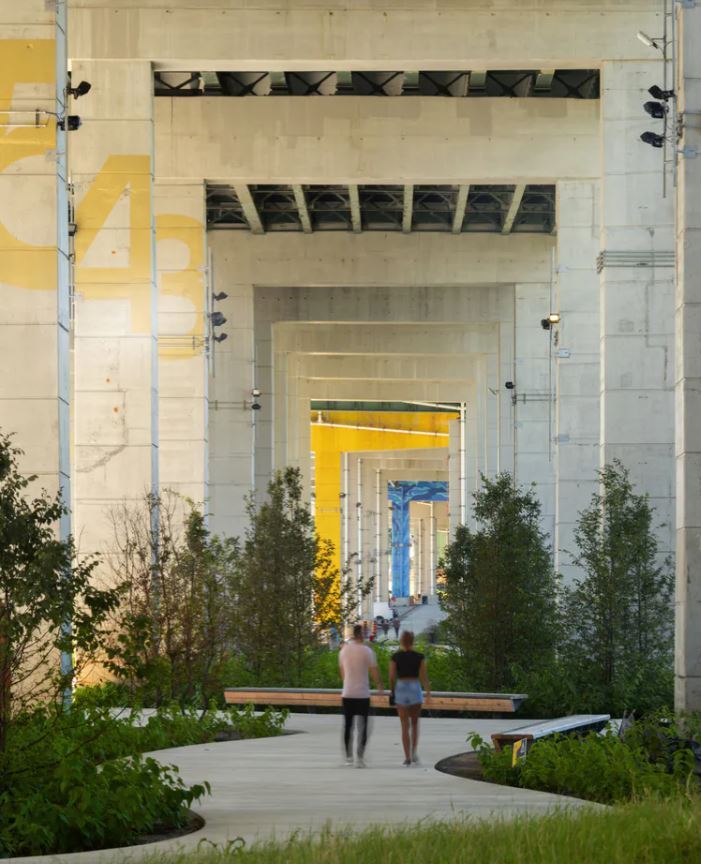
The Bentway, Toronto, Canada (Source: archdaily.com_re-thinkingthefuture.com)
Climate resilience is a health-equity issue
As cities get hotter and weather extremes become more common, public spaces play an increasingly important role in protecting health. This is especially urgent in neighbourhoods with limited tree canopy, high amounts of pavement, and older housing stock.
Landscape architecture can reduce climate-related health risks through:
- Shade trees and cooling landscapes
- Permeable surfaces and stormwater management
- Drinking fountains and cooling features
- Materials that reduce heat absorption
- Emergency gathering spaces and resilient community hubs
These interventions are not just environmental upgrades. They are equity measures. Extreme heat, flooding, and poor air quality do not affect all communities equally. Public spaces can help reduce those unequal burdens.
Social connection is a public health outcome
Loneliness, exclusion, and weak social ties can have serious health effects. Well-designed public spaces help build the social fabric that supports individual and community resilience.
Spaces that encourage informal interaction can strengthen trust and belonging. That might look like movable seating in a plaza, flexible community event space, multigenerational play areas, or markets and gardens that support local culture and exchange.
For health equity, the key question is not simply whether people can enter a space, but whether they feel that the space is for them. Design choices, signage, programming, art, language, and stewardship models all influence whether people feel welcome.
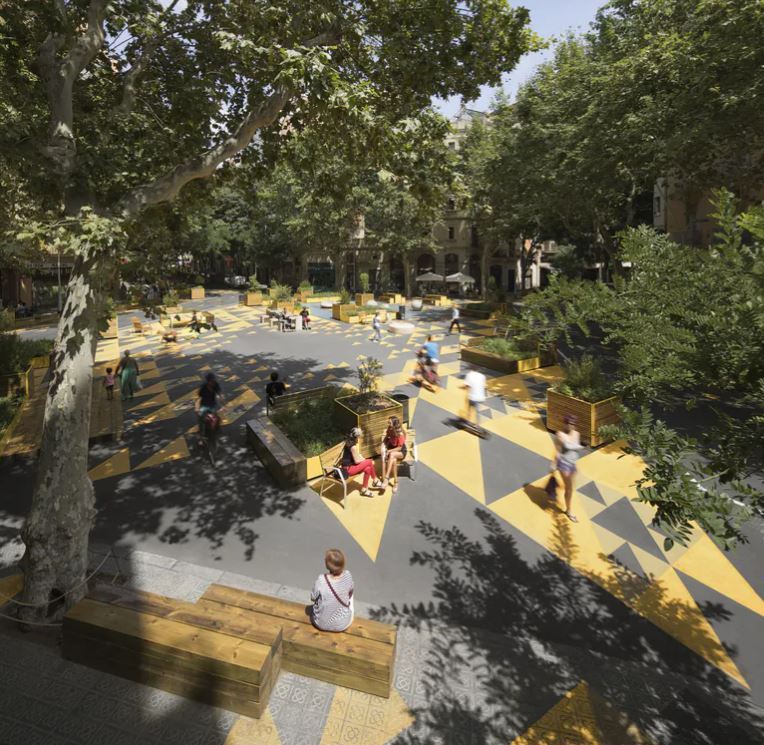
Superblock, Barcelona, Spain (Source: archdaily.com_re-thinkingthefuture.com)
Equity requires community-led design
Public spaces contribute to health equity most effectively when communities shape them from the start. This means moving beyond one-off consultation and toward genuine participation, shared decision-making, and long-term stewardship.
Community-led design helps reveal needs that standard planning processes often miss:
- Where people feel unsafe
- Which routes are avoided
- What amenities are missing
- Which cultural practices should be supported
- How different groups use space at different times of day
It also helps prevent a common failure: delivering a polished design that looks successful on paper but does not reflect lived realities.
For landscape architects, this requires humility. Expertise matters, but local knowledge matters just as much.
The risk of improvement without protection
Public realm investment can improve health, but it can also create unintended harm if it contributes to displacement. A new park, greenway, or waterfront can raise property values and make a neighbourhood less affordable for the very residents it was meant to benefit.
That is why health equity cannot be separated from housing stability, anti-displacement policy, and equitable development. Public spaces should improve quality of life without pushing people out.
Designers may not control land markets, but they can still advocate for:
- Early collaboration with housing and policy partners
- Investment in existing residents, not just new users
- Local hiring and community stewardship programs
- Phased improvements that respond to neighbourhood priorities
- Planning frameworks that tie public-space investment to affordability protections
A truly equitable public space strategy asks not only, “Who benefits?” but also, “Who gets to stay?”
What equitable public spaces look like in practice
A health-equity lens changes what success looks like. Instead of focusing only on visual impact or visitor numbers, it asks whether a space improves conditions for those who have historically been underserved.
That might mean prioritizing:
- Shade over spectacle
- Safe crossings over iconic forms
- Maintenance over novelty
- Local gathering needs over destination branding
- Universal access over minimal compliance
These choices may seem modest, but they often have the greatest impact on everyday health.
A broader role for landscape architecture
Landscape architects are uniquely positioned to connect public health, climate resilience, community life, and spatial justice. The discipline works across systems, scales, and timeframes. It can shape not just individual sites, but the wider networks that determine whether people can live healthy lives.
Public spaces alone will not solve health inequities. But they are one of the most visible and immediate ways cities can begin to address them. They can reduce exposure to harm, increase access to opportunity, and make care tangible in the built environment.
The central question is not whether public spaces affect health. They clearly do. The real question is whether we are designing them to benefit those who need them most.
Health equity gives landscape architecture a clear challenge and a powerful purpose: to create public spaces that do more than serve the public in theory. They must support dignity, safety, comfort, and belonging in practice.